High-Performance Gym Fitness Turf for Athletic Workouts
Dense, short-pile synthetic surfaces engineered for sleds, sprints, agility and high-volume training. Built for commercial gyms and serious home setups across Birmingham.
Face Weight
Commercial Lifespan
Birmingham Installs
Gym owners across Birmingham face the same problems
Sleds dig into rubber. Sprints feel slippery on concrete. Joints take a beating after long conditioning blocks. Members complain. Floors wear out faster than expected.
High-performance gym fitness turf solves that. This is not soft landscaping grass. It is a dense, short-pile synthetic surface engineered for repeated athletic work — polyethylene or nylon fibers, strong tuft bind, and optional foam backing that handles sled pushes, agility drills and high-volume training without falling apart.
- ✓ Facilities near Railroad Park & City Walk BHAM already use these zones
- ✓ Better member engagement and fewer flooring repairs
- ✓ Home gyms in Homewood, Vestavia Hills & Mountain Brook install shorter lanes
- ✓ Same performance benefits on a smaller scale
Why Gym Fitness Turf Is Ideal for High-Intensity Training
Built for the exact demands of modern functional and athletic programming.
Handles Repeated High-Impact Work
Dense fiber construction resists crushing. High stitch rates keep blades upright after heavy traffic. Commercial installs still look sharp after a full year of morning classes and evening athlete sessions.
Perfect Friction for Sled Work
Short-pile turf hits the sweet spot — controlled resistance without the sled digging in or losing traction. Ideal for push-pull combinations, farmer carries and loaded marches.
Reliable Grip for Agility
Sharp cuts, lateral shuffles and ladder drills stay consistent even when athletes sweat. Members push harder once they trust the surface.
Protects the Floor Beneath
Takes the abrasion so concrete or rubber underneath lasts longer. Dirt and chalk stay on the turf instead of grinding into other surfaces.
Reduces Joint Stress
Foam-backed systems lower impact forces from box jumps and landings. Fewer post-session complaints and better long-term training consistency.
Sprint & Conditioning Ready
Marked lanes turn open floor into usable sprint tracks. Conditioning circuits flow better when every station sits on the same reliable surface.
Choosing the Right Turf for Functional Training Areas
Most people start with the wrong product — residential grass that fails under sleds within months. Match the surface to your actual training intensity.
Match Intensity
Home gyms (3–4 sessions/week) can use mid-range density. Commercial boxes need the highest face weight and strongest fiber recovery. Elite facilities demand commercial-grade nylon or high-density polyethylene.
Pile Height & Density
10–20 mm works for most gym applications. Shorter piles favor pure sled tracks. Density and stitch rate matter more than height for long-term recovery.
Fiber Choice
Polyethylene for softer multi-use zones. Nylon for superior abrasion resistance on dedicated high-volume sled lanes. Most Birmingham commercial installs use both strategically.
Shock Absorption
5–12 mm foam backing makes a clear difference for plyometrics and repeated landings. Pure sled lanes over existing rubber can sometimes skip it.
| Spec | Recommended for Gyms | Why It Matters |
|---|---|---|
| Pile Height | 10–20 mm | Smooth sled movement and stable footing |
| Face Weight | 50+ oz per sq yd | Long-term durability under heavy use |
| Fiber Type | Polyethylene or Nylon | Balance of comfort and abrasion resistance |
| Backing | Polyurethane preferred | Better odor control and indoor performance |
| Foam Layer | 5–12 mm optional | Shock absorption for joint protection |
| Infill | None or minimal | Cleaner indoor environment, less dust |
For multi-use outdoor or hybrid sports surfaces, see our multi-sports turf installation and football pitch artificial turf pages.
Gym Fitness Turf for Cross-Training & Athletic Workouts
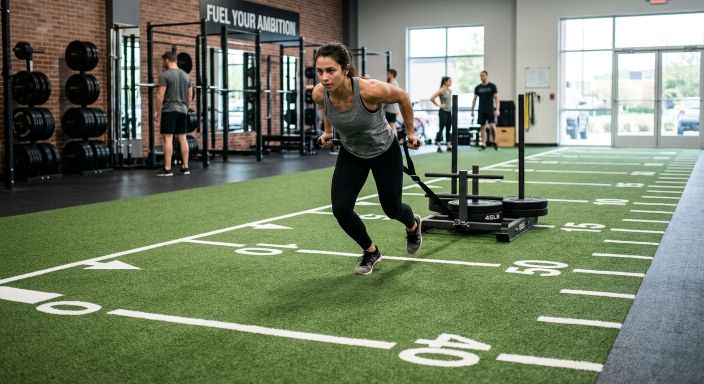
Sled Push & Pull Workouts
The primary reason most gyms install fitness turf. Controlled friction builds serious lower-body power and conditioning. Coaches program heavy pushes, light speed pulls and mixed variations on the same lane without surface damage.
Sprint & Acceleration Lanes
Marked lanes give athletes a clear path. Accelerate, hit top speed and decelerate on a consistent surface. Coaches time starts and measure progress without floor variables interfering.
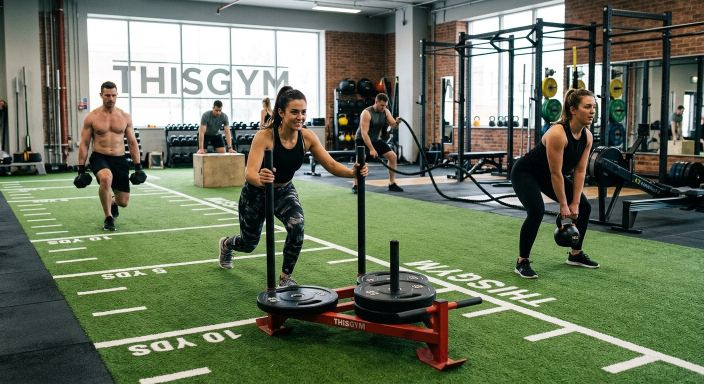
Agility, Footwork & Functional Circuits
Cones, ladders and reaction drills demand reliable traction. The surface supports sharp cuts and rapid direction changes so athletes train more aggressively.
Hybrid Strength + Conditioning Zones
Pair turf lanes with rubber lifting platforms. Members move between strength work and conditioning without changing shoes or zones. Programming becomes cleaner — ideal for HYROX-style and mixed-modal classes.
Looking for broader sports surfaces? Explore our tennis court artificial grass and commercial artificial grass installation services.
Practical Insights from Birmingham Installations
Facilities and home gyms across the city are already seeing the difference.
Near Railroad Park & City Walk
Indoor turf zones let members keep the same style of work when weather turns hot or rainy. Sled lanes and sprint tracks stay available year-round.
Homewood, Vestavia & Mountain Brook
Home owners install 15–25 ft dedicated lanes. Consistent training through Alabama summers — cooler and cleaner than concrete, simple vacuuming keeps it ready.
Commercial Performance Gyms
Marked lanes increased engagement during conditioning blocks. Members use the turf more once the space feels intentional and purpose-built.
Case Studies & Client Feedback
Commercial Performance Facility
Replaced worn rubber with short-pile, foam-backed polyethylene. Sled traffic increased without surface damage. Members reported better grip and reduced joint fatigue. Installation paid for itself through lower maintenance and higher class attendance.
Mountain Brook Home Gym
20-foot dedicated sled lane over concrete. Owner trains year-round with loaded pushes and recovery work — no more knee stress from training directly on hard flooring.
Downtown Mixed-Use Gym
Color-marked lanes and open functional zones. Coaches now run multiple groups simultaneously. Floor traffic flows better and programming became more efficient.
We run sleds six days a week. The turf still looks and feels solid after more than a year of hard use.
— Strength coach, local performance gym
My knees used to bother me after every sprint session on concrete. The turf changed that. I can train harder and recover better.
— Home gym owner, Homewood
Members actually ask to use the turf zone now. It used to be an afterthought. Now it is one of the most popular areas on the floor.
— Gym owner near City Walk BHAM
Cost & Installation Considerations
Quality gym fitness turf is an investment that protects your floors and improves training quality for years.
Material
Commercial-grade product depending on face weight, fiber and foam options
Professional Install
Site prep, adhesive or tape systems, markings and finishing
Warranty
Commercial products when specified and installed correctly
Most indoor projects over existing concrete or rubber move quickly. Outdoor installs need proper drainage and UV-stable fibers. Local installers familiar with Alabama conditions handle base work and weather exposure correctly the first time.
For larger commercial or multi-sport projects see our commercial artificial grass installation Birmingham page.
Maintenance That Keeps Performance High
Daily / Weekly
Vacuum regularly to remove chalk, dirt and debris. Hose down as needed. Non-infill systems stay cleaner with less effort and resist odor better indoors.
What to Avoid
Harsh chemical cleaners that can break down fibers. Address any edge lifting or seam issues quickly before they grow.
Result
Facilities that follow simple weekly routines keep the surface looking and performing like new for years under heavy commercial use.
Gym Fitness Turf FAQs
Ready to Add a High-Performance Training Zone?
Contact us for a free consultation and sample review. We measure the space, discuss your exact training style, and recommend the right specification for Birmingham conditions. Clear pricing, realistic timelines, and a surface built to handle the way you actually train.