Birmingham and much of the West Midlands sit on clay-rich ground. Water moves slowly through it. After a few days of rain the lawn turns soft and muddy. In dry spells the same clay hardens and cracks. Natural grass struggles on both counts.
A quick or cheap install on this soil fails fast. Water sits on the surface. The base settles unevenly. Edges lift. Weeds find their way through. The whole surface starts to look tired within a couple of seasons.
Correct installation solves these problems at the foundation. A well-built base drains freely. The turf stays level. The lawn remains usable after rain and stays green through summer. Dogs stop tracking mud indoors. Children can play without turning the garden into a swamp. You stop the weekly cycle of mowing, feeding and patching.
Why Proper Artificial Grass Installation Matters in Birmingham
Local experience counts. Installers who know the soil conditions around Edgbaston, Bournville, Shirley and Solihull build the sub-base differently from someone working on sandier ground elsewhere in the country.
Whether you have a small terraced plot near Cannon Hill Park or a larger family garden closer to Sutton Park, the same principles apply: deeper excavation where needed, correct falls, solid edging, and a properly compacted stone base. For full service details visit our main artificial grass installation Birmingham page.
How Much Does Artificial Grass Installation Cost in Birmingham?
Prices in 2026 for a full professional installation (groundwork, membrane, base, turf, seaming and finishing) typically fall in these ranges:
| Garden Size | Typical Cost Range | Common Notes |
|---|---|---|
| Small (up to 40 m²) | £1,150 – £2,200 | Straightforward access, standard residential turf |
| Medium (40–80 m²) | £2,050 – £4,000 | Most typical Birmingham rear gardens |
| Large (80–150 m²+) | £4,000 – £8,000+ | Extra drainage, slopes or limited access raise the figure |
Material costs alone usually sit between £8 and £30 per square metre. Full installed prices often land between £50 and £100 per square metre once labour and proper ground preparation are included.
Factors that push costs higher:
- Heavy clay that needs deeper excavation or additional drainage
- Restricted access (common in older terraced streets)
- Removal of existing turf, paving or old decking
- Premium UV-stable or pet-friendly turf
- Shock pads under play areas
- Waste removal and skip hire
Very low quotes almost always cut the base layer. That saves money on day one but creates dips, puddles and early failure. A solid install usually pays for itself through the complete removal of mowing, watering, fertiliser and annual lawn treatments. See current pricing and options on our Birmingham installation page.
Step-by-Step Artificial Grass Installation Process
A lasting job follows a clear sequence. Each stage exists for a reason, especially on Birmingham clay.
Free Site Survey and Design
An experienced installer visits the garden. They measure the exact area, check levels and existing falls, look at how water currently behaves, and note soil type and access. You discuss how the space gets used — dogs, young children, entertaining, or simply a clean view from the house. You receive a clear written quote with no hidden extras.
Ground Preparation and Excavation
Existing turf and topsoil come out to a depth of 75–100 mm. On heavier clay this often means going deeper to reach more stable ground. Roots, stones and soft spots are cleared. The area is roughly levelled with a gentle fall away from the house so water moves in the right direction.
Installing Edging
Treated timber, steel or composite edging is fixed around the perimeter. It contains the base materials and gives a firm edge to secure the turf. Without solid edging the grass can creep or lift over time, especially on clay that expands and contracts with moisture.
Weed Membrane and Drainage System
A high-quality permeable weed membrane covers the entire excavated area. Edges overlap generously so nothing grows through. On plots that stay wet after rain, extra drainage channels or a French drain are added at this stage. This step is critical across much of Birmingham where clay holds water.
Base Layer and Levelling
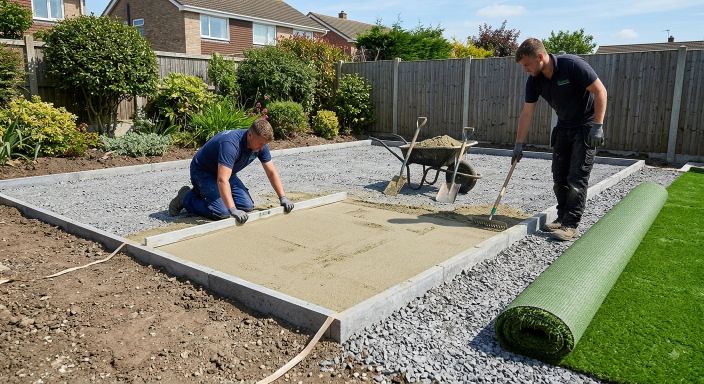
MOT Type 1 crushed stone (or similar angular aggregate) is spread in layers and compacted thoroughly with a vibrating plate. Typical depth runs 50–75 mm. A thin levelling layer of granite dust or sharp sand follows. The surface is screeded smooth with a consistent fall. Proper compaction prevents future dips and keeps water moving freely through the base.
Laying the Artificial Turf
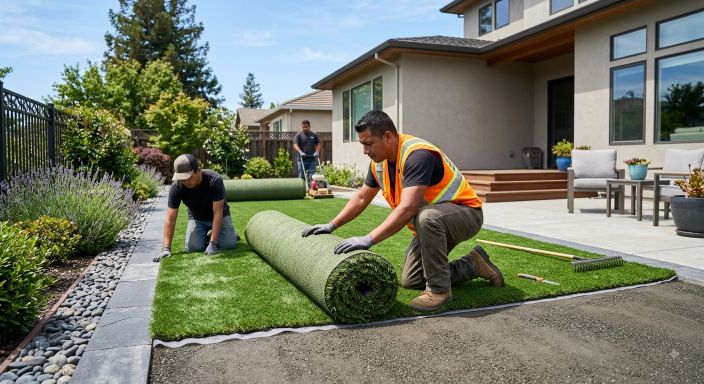
Rolls are positioned so the pile faces the same direction — usually towards the main viewpoint from the house or patio. The turf is left to rest for a few hours so it settles and any creases relax. Accurate measuring and careful unrolling keep joins clean and waste low.
Cutting, Seaming and Securing
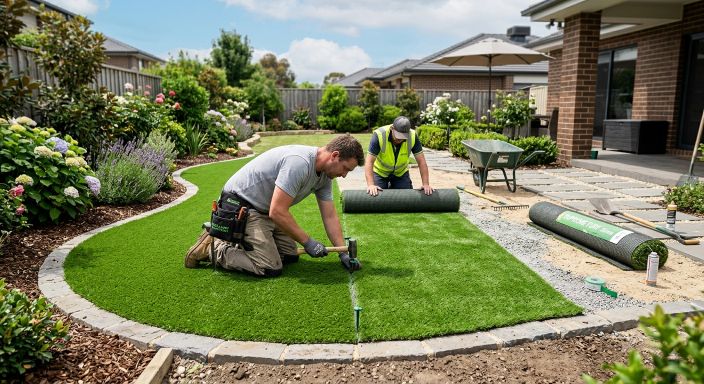
Excess is trimmed from the back with a sharp knife. Factory edges are removed. Seams are joined with specialist outdoor tape and adhesive so the fibres meet cleanly. Edges are fixed firmly to the perimeter. Good seaming becomes almost invisible once the pile is brushed.
Infill, Brushing and Finishing Touches
Infill — usually kiln-dried silica sand, sometimes mixed with rubber granules for extra support — is spread evenly and brushed into the fibres. This keeps the blades upright, adds weight and improves drainage. A final brush lifts the pile. The site is left clean and ready to use. Most residential gardens take between one and four days once materials are on site.
Materials Used in Quality Artificial Grass Installation
Synthetic Fibres
Polyethylene for a soft, realistic feel; polypropylene for durability; nylon in high-wear zones.
Backing
Latex or polyurethane. Polyurethane generally handles temperature changes better.
Infill
Silica sand is standard. Pet-friendly antimicrobial options reduce odours. Rubber granules for sports or heavy-use areas.
Shock Pad
Optional underlay that adds cushioning for play areas or children’s gardens.
Weed Membrane
Permeable geotextile that stops growth while allowing water through.
Base Materials
Crushed stone (MOT Type 1) and granite dust for stability and drainage.
Pile height for residential lawns usually sits between 30 mm and 40 mm. Higher stitch rates and multi-tone yarns look more natural. Strong UV resistance prevents fading under the Midlands sun.
Common Mistakes to Avoid When Installing Artificial Grass
These problems appear regularly on rushed or budget jobs across Birmingham:
- ✗ Inadequate sub-base depth or poor compaction — leads to dips and standing water on clay.
- ✗ Ignoring drainage falls — water sits on the surface after rain.
- ✗ Wrong infill for pets — odours build up over time.
- ✗ Misaligned pile direction or weak seaming — joins stay visible.
- ✗ Missing or weak edging — edges lift and fray.
- ✗ Laying directly on soil or a thin sand layer — weeds and movement appear within a season.
Most of these issues show up within the first two winters. Fixing them later costs more than doing the groundwork properly at the start.
DIY vs Professional Artificial Grass Installation in Birmingham
DIY can work for very small, level, easy-access areas if you already own the right tools (turf cutter, plate compactor, etc.). Most people underestimate the physical effort and the precision needed for drainage and clean seams on clay soil.
Professional installation makes clearer sense when:
- The garden has clay, slopes or existing drainage problems
- Access is restricted
- You want a written guarantee on both materials and workmanship
- You prefer a clean, finished result without weeks of disruption
A competent local team finishes faster, removes waste, and stands behind the finished job. See our guarantee page and main artificial grass installation Birmingham service page for full details.
Artificial Grass Project Case Studies in Birmingham
What Our Birmingham Customers Say
“We live near Sutton Park and the clay was a nightmare. The team sorted the drainage properly and the lawn has been perfect through two wet winters.”
“Our dogs used to trash the grass. Now they can run around and we don’t spend every weekend cleaning muddy paws.”
“Best decision we made for the back garden in Harborne. Looks natural, no more brown patches, and the kids play on it constantly.”
“Professional from the first survey to the final brush. The joins are invisible and it drains better than our old lawn ever did.”
Maintenance After Installation
Brush the fibres every couple of weeks with a stiff broom or power brush to keep them upright. Remove leaves with a blower or soft rake. Hose off pet waste and use a mild enzyme cleaner if needed. In autumn clear fallen leaves so they don’t mat down.
With a correct base and quality turf most installations last 12–20 years in Birmingham conditions. No mowing, no watering, no feeding, no scarifying. Learn more on our maintenance page.
Choosing the Right Artificial Grass Installer in Birmingham
Look for:
- Proven local experience with clay soils and typical Birmingham garden layouts
- Clear written quotes that detail the groundwork
- Proper insurance and warranties on both labour and materials
- Real project photos from Birmingham, Solihull, Sutton Coldfield and nearby areas
- Willingness to explain the process and answer questions on site
Avoid quotes that seem too cheap or skip the survey. Ask how they handle drainage on clay and what base depth they use as standard. Full details of our process, materials and local projects are on the main artificial grass installation Birmingham pillar page. You can also explore our back garden, front garden and garden makeover services.
Frequently Asked Questions
Ready to Transform Your Garden?
Book a free site survey and appointment. We’ll visit your garden, assess the ground, show samples and give you a detailed quote. No pressure. Just practical advice tailored to your plot — whether you’re in central Birmingham, Harborne, Solihull, Sutton Coldfield, Edgbaston, Bournville or further into the West Midlands.
Or call us today — let’s get your outdoor space looking green, usable and low-maintenance every day of the year.